
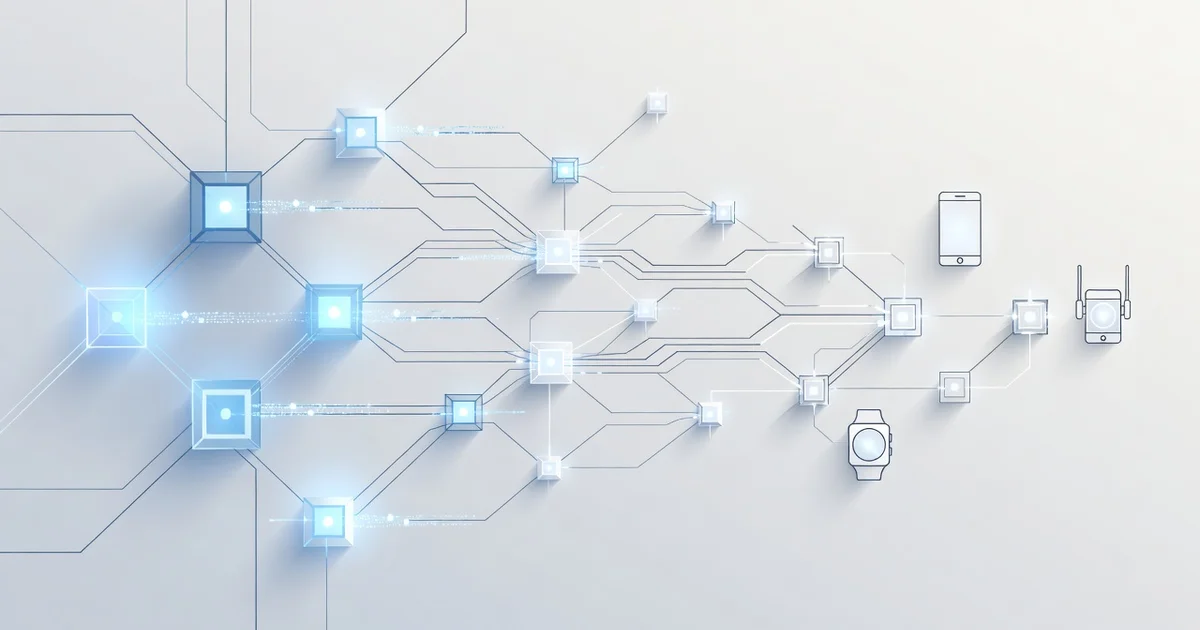
Your smart devices generate massive amounts of data every second. Sending all of it to distant cloud servers creates lag and slows down critical applications. That’s where edge computing comes in — it processes data closer to where it’s created, right at the “edge” of your network.
So what is edge computing, and why is it suddenly everywhere? In this article, we’ll break down how it works, explore real-world examples, and explain why businesses are rapidly adopting it. By the end, you’ll understand exactly how edge computing can deliver faster speeds, lower costs, and better performance for your organization.
Introduction
This article explores What Is Edge Computing and Why Is It Becoming Important with clear, practical guidance. In simple terms, edge computing is the practice of processing data near the place where it is created rather than sending everything to a distant, centralized data center. That shift sounds technical, but its effects are easy to see: faster responses, lower bandwidth costs, and better reliability when networks are unstable.
For years, the standard approach was to collect data from devices, ship it to the cloud, analyze it, and send results back. That model works well for many applications, but it struggles when milliseconds matter or when connectivity is poor. Edge computing addresses those gaps. It is not a replacement for the cloud. Instead, it moves part of the workload closer to users and devices so that the whole system performs better.
Understanding the fundamentals of What Is Edge Computing and Why Is It Becoming Important helps you make informed decisions, whether you are choosing technology for a business, studying the field, or simply trying to keep up with how modern systems work. The goal here is to give you actionable knowledge, not jargon.
Key Concepts
To understand edge computing, you need a few core ideas. Each one explains why the model is spreading across industries.
- Latency: The delay between sending a request and receiving a response. When data travels thousands of miles to a central server, latency adds up. Processing at the edge reduces that distance dramatically.
- Bandwidth: The capacity of a network connection. Sending raw video, sensor readings, or machine data to the cloud consumes bandwidth. Filtering and analyzing locally means you send only what matters.
- The edge itself: Any location close to the data source. That could be a factory floor, a retail store, a cell tower, a vehicle, or even a smartwatch.
- Cloud and edge working together: The edge handles time-sensitive tasks, while the cloud manages long-term storage, heavy analytics, and coordination across many sites.
- Distributed architecture: Instead of one giant brain, you have many smaller processing points. This improves resilience because a single failure does not take down the entire system.
These concepts explain the growing interest. As more devices come online, the volume of data grows faster than centralized networks can comfortably handle. Edge computing turns that challenge into a manageable, distributed workflow.
Deep Dive
Why is edge computing becoming important now rather than a decade ago? Several trends have converged. First, the number of connected devices has exploded. Sensors, cameras, and industrial machines generate continuous streams of data. Second, expectations for speed have risen. Users want instant responses from apps, and businesses want real-time automation. Third, regulations in many regions require certain data to stay local, which makes centralized processing impractical.
The practical benefits fall into a few categories. Performance improves because data does not have to travel far. Costs drop because less data moves across expensive network links. Reliability increases because local systems can keep working even when the internet connection drops. Security can improve too, since sensitive data may never leave the premises.
Consider a few real-world examples. In manufacturing, sensors on equipment detect anomalies and trigger maintenance alerts in real time, avoiding costly downtime. In retail, cameras analyze foot traffic and inventory without streaming hours of video to the cloud. In healthcare, wearable devices monitor patients and alert staff instantly if something looks wrong. In autonomous vehicles, decisions must happen in milliseconds, so processing cannot depend on a distant server.
There are trade-offs. Managing many edge locations is more complex than managing one data center. Physical security matters because devices sit in the real world. Software updates must be coordinated across a fleet. None of these problems are unsolvable, but they require planning. The key is to treat edge computing as part of a larger architecture, not a magic fix.
Best Practices
If you are exploring or adopting edge computing, a few practices keep projects on track.
- Start with a specific problem. Choose a use case where latency, bandwidth, or reliability clearly matters. Vague goals lead to wasted effort.
- Design for limited resources. Edge devices often have less power, memory, and storage than cloud servers. Keep software lean.
- Prioritize what stays local. Not all data needs edge processing. Decide which tasks require speed and which can wait for the cloud.
- Plan for connectivity gaps. Assume the network will fail sometimes and design local systems to keep functioning.
- Secure every layer. Encrypt data, authenticate devices, and update software regularly. Edge devices are physically accessible, so treat them accordingly.
- Monitor and measure. Track latency, uptime, and cost savings so you can prove value and adjust over time.
- Keep skills current. Teams need familiarity with networking, distributed systems, and device management.
Reliable information and consistent habits lead to better long-term outcomes. That applies here: steady maintenance and clear documentation prevent small issues from becoming major failures.
Step-by-Step Guide
Here is a practical path you can follow, whether you are evaluating edge computing for an organization or learning it for yourself.
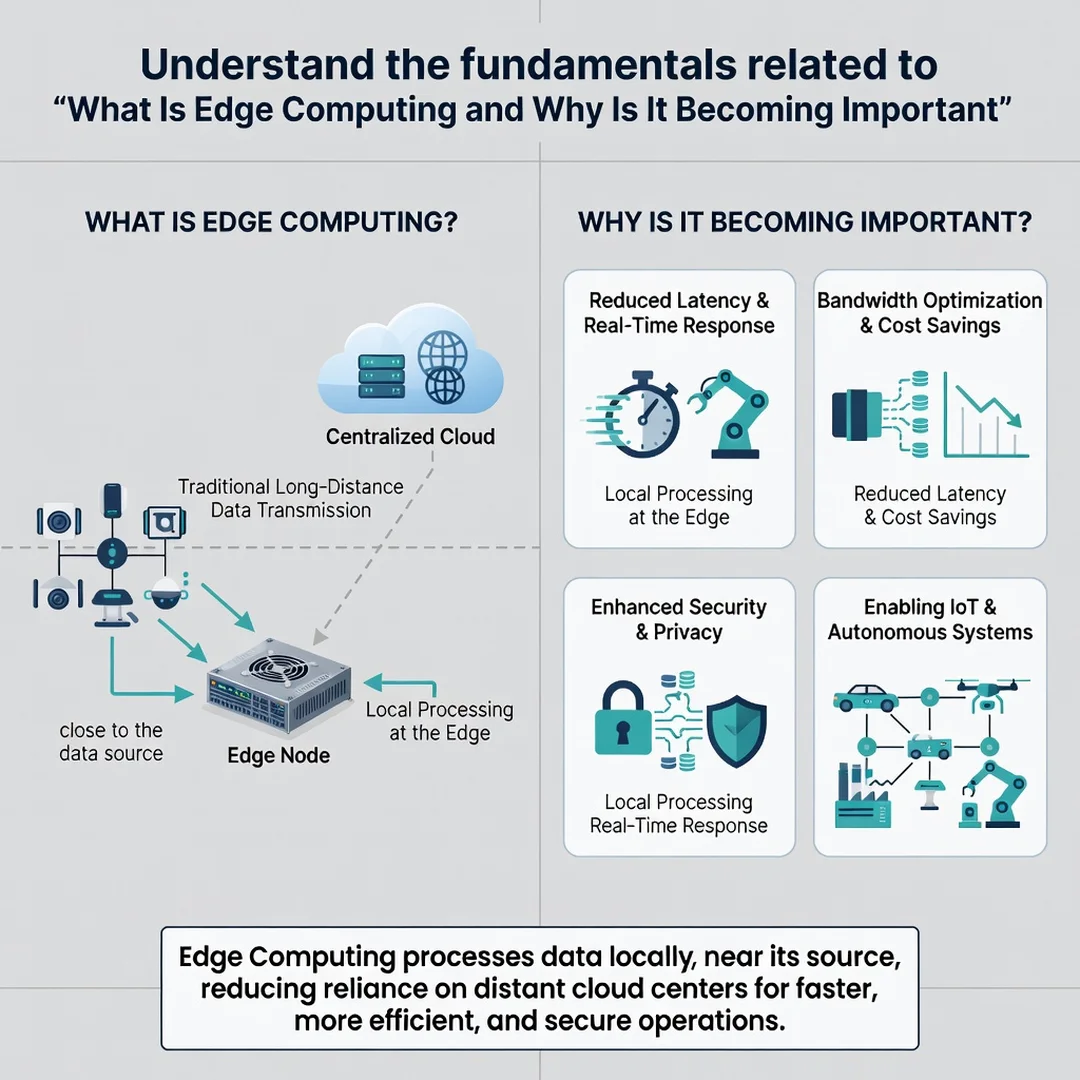
Step 1: Understand the fundamentals
Begin by learning what edge computing is and how it differs from cloud computing. Read introductory material, watch explainer videos, and note the key terms like latency, bandwidth, and distributed architecture. A solid conceptual foundation prevents confusion later.
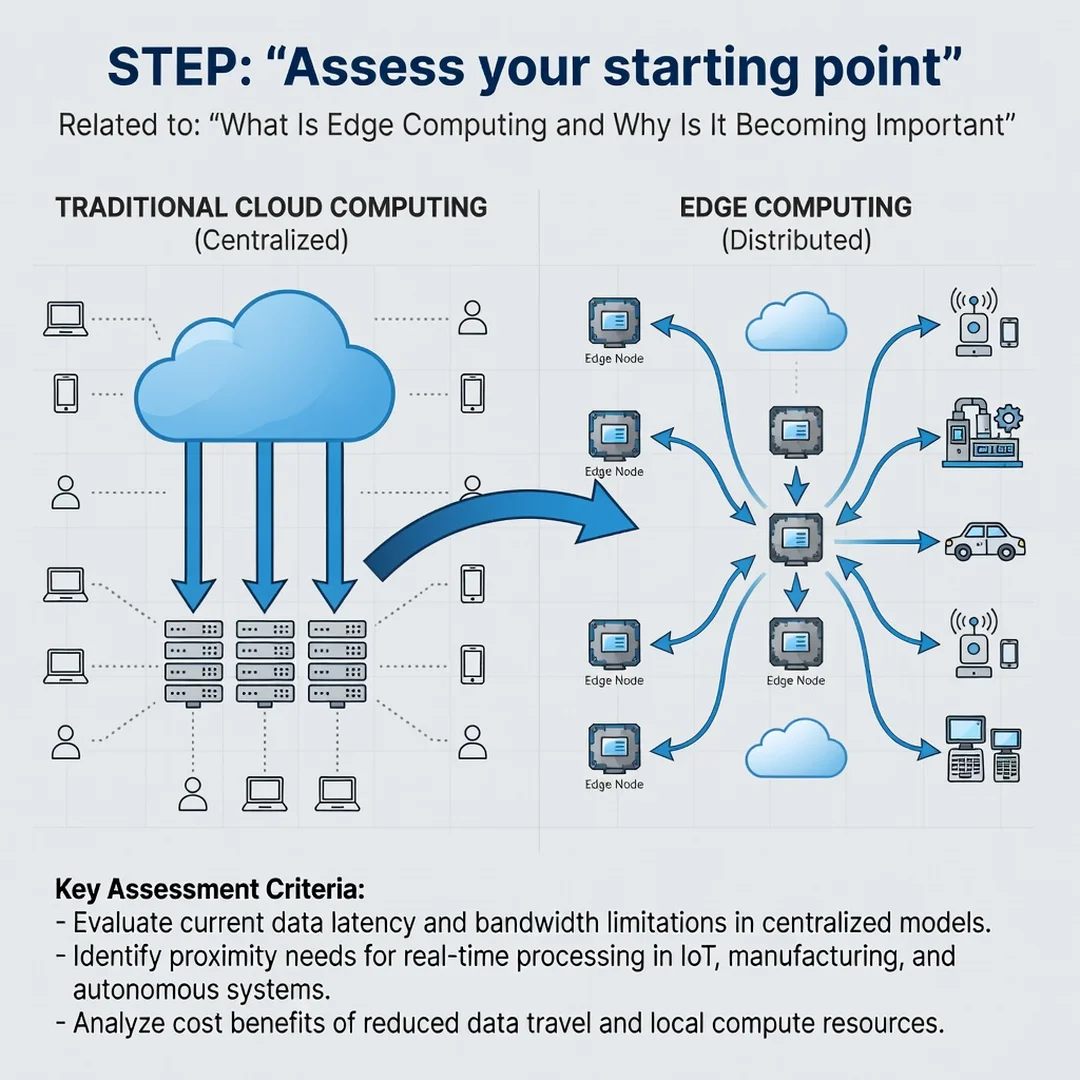
Step 2: Assess your starting point
Look at your current setup. What devices do you use? Where is data generated? How is it processed today? Identify pain points such as slow response times, high data costs, or unreliable connections. This baseline shows where edge computing could help.
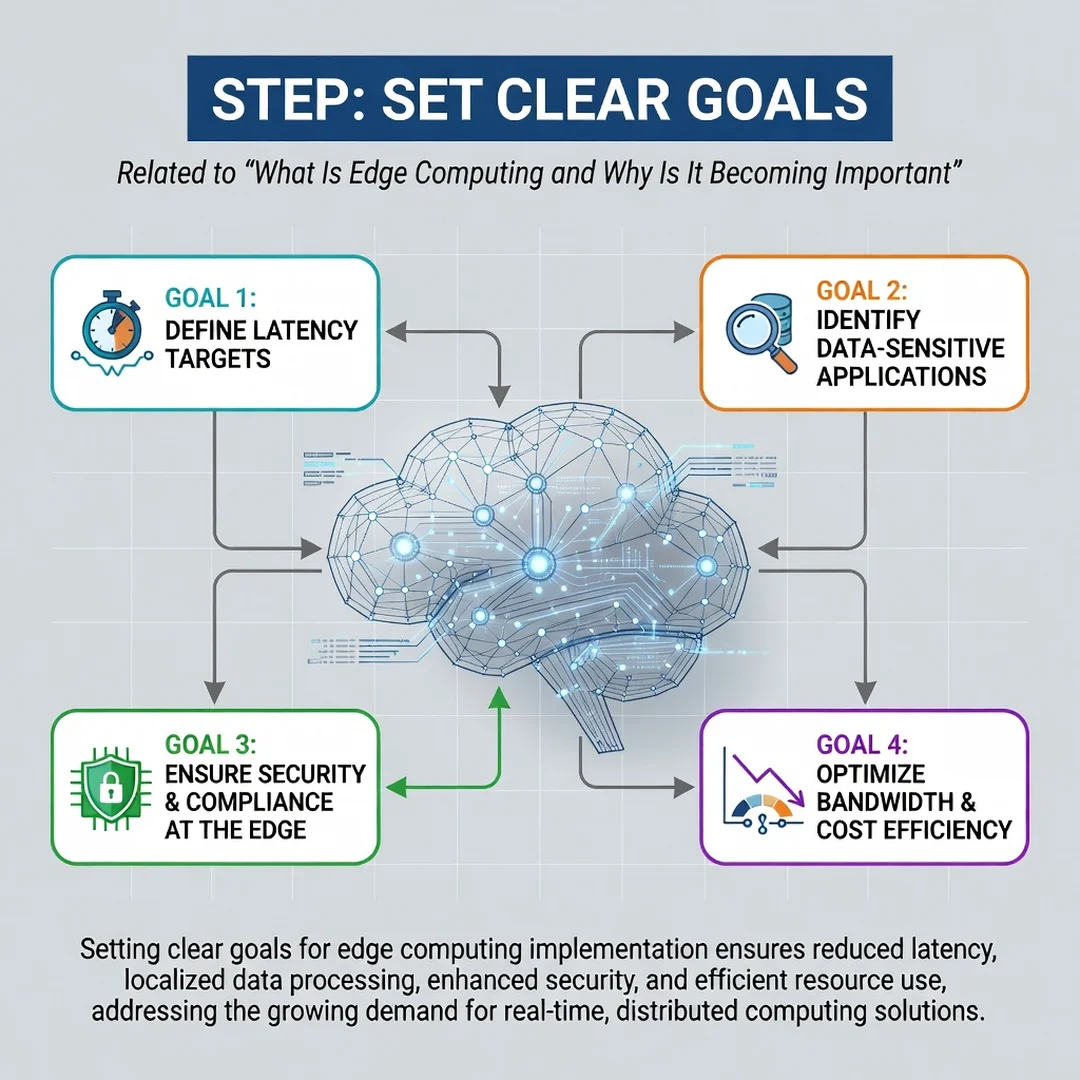
Step 3: Set clear goals
Define what success looks like. For example, you might aim to reduce latency by a specific amount, cut bandwidth usage, or keep critical data on-site. Write these goals down and make them measurable so you can track progress.
Step 4: Gather necessary resources
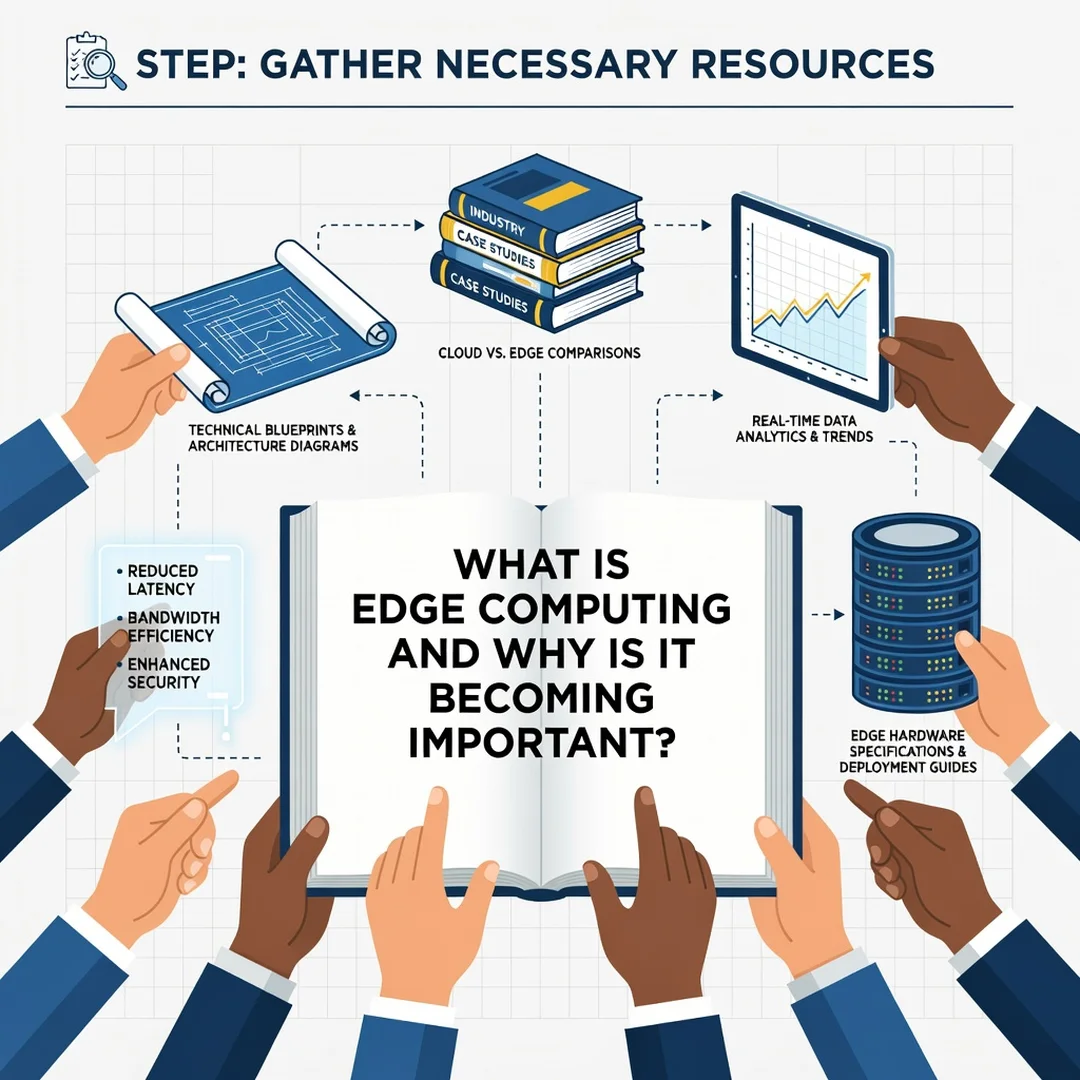
Determine what you need to proceed. That may include hardware such as edge servers or gateways, software platforms for device management, network upgrades, and people with the right skills. If resources are limited, start small with a pilot project.
Step 5: Apply the core methods
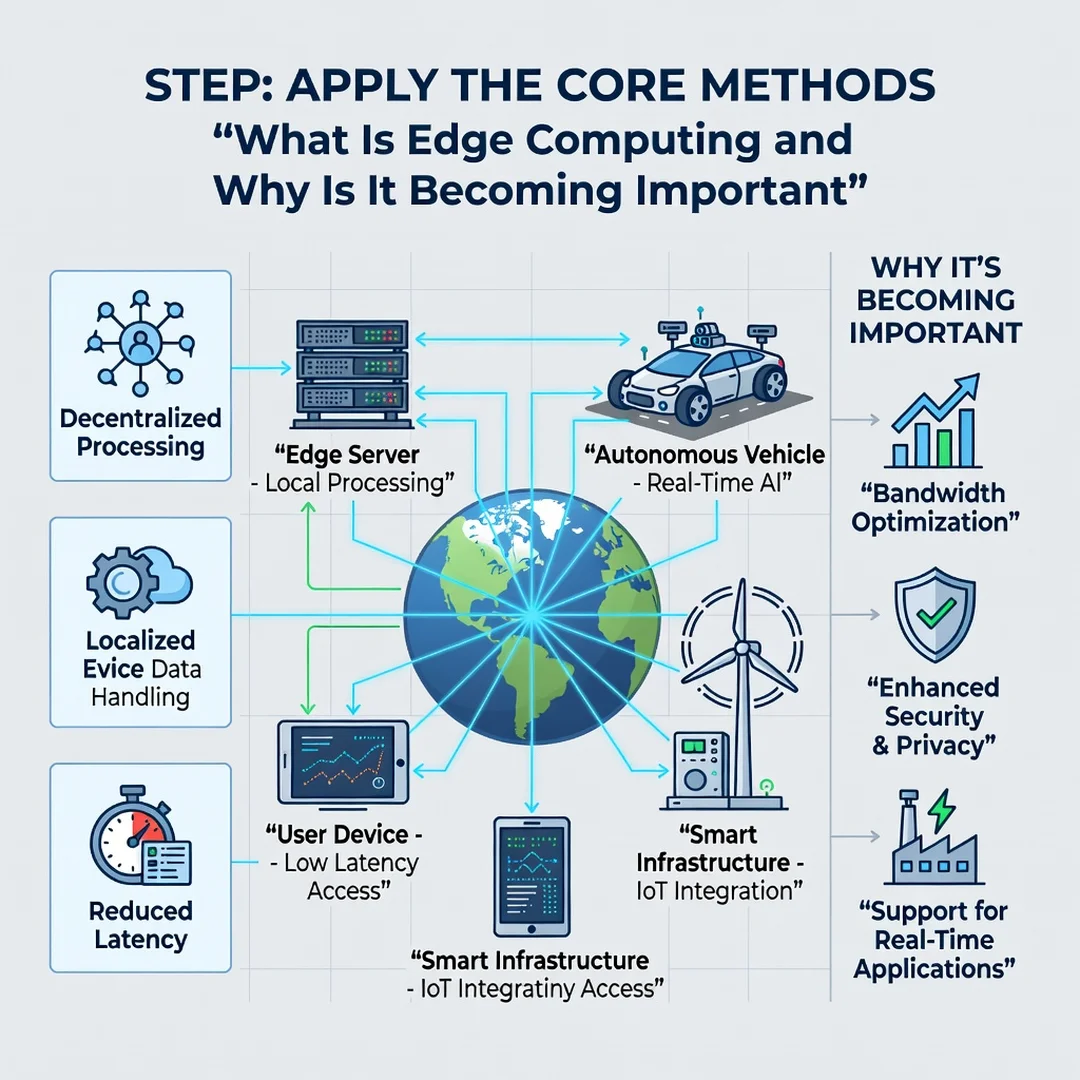
Put your plan into action. Deploy edge processing for the chosen use case, configure devices, and connect them to your cloud or central systems for coordination. Test performance, secure the setup, and monitor results. Use what you learn to expand or refine the approach.
FAQ
What should I know about What Is Edge Computing and Why Is It Becoming Important?
The main thing to know is that edge computing processes data close to where it is created, which reduces latency, saves bandwidth, and improves reliability. It works alongside the cloud rather than replacing it. Its growing importance comes from the rise in connected devices, demand for real-time responses, and data regulations. Understanding the fundamentals helps you make informed decisions about whether and how to use it.
Who is this guide for?
This guide is for anyone seeking clear, actionable information about edge computing. That includes business decision-makers, IT professionals, students, and curious readers who want a practical overview without unnecessary technical depth. No prior expertise is required, though a basic familiarity with computers and networks is helpful.
Conclusion
Edge computing is reshaping how data is handled by moving processing closer to the source. It offers faster performance, lower costs, and greater resilience, which explains why industries from manufacturing to healthcare are adopting it. The trade-offs, such as management complexity and security concerns, are real but manageable with careful planning.
By following the steps outlined here, you can move from understanding the fundamentals to applying them in a way that fits your situation. Reliable information and consistent habits lead to better long-term outcomes, so start with a clear problem, set measurable goals, and build from there.
Frequently Asked Questions
What should I know about What Is Edge Computing and Why Is It Becoming Important?
This guide covers the essentials of What Is Edge Computing and Why Is It Becoming Important with practical steps you can apply right away.
Who is this guide for?
Anyone looking for a clear, structured overview without unnecessary complexity.
You now have a solid foundation for What Is Edge Computing and Why Is It Becoming Important. Apply the best practices above and revisit this guide as your needs evolve.