

When you hear about modern technology and privacy, you may picture tools designed to track your every click. The reality is more encouraging: today’s innovations are increasingly built to protect you rather than expose you. From end-to-end encryption to on-device data processing, the same advances that once raised privacy concerns are now closing the gaps.
In this article, we’ll explore how modern technology is improving online privacy and what it means for your daily browsing, messaging, and shopping. You’ll discover practical features already available—plus simple steps to make them work for you.
Introduction
Online privacy was once a niche concern for technologists and security researchers. Today, it affects everyone who sends an email, browses a website, or uses a mobile app. The good news is that modern technology is not only creating new privacy challenges — it is also delivering powerful tools to solve them. This article explores How Modern Technology Is Improving Online Privacy with clear, practical guidance you can apply immediately.
From end-to-end encryption in messaging apps to browser features that block invasive trackers, the digital landscape is shifting in favor of the user. Understanding these changes matters because your personal data has real value, and the choices you make online shape what advertisers, platforms, and even strangers can learn about you.
Key Concepts
Before diving into specific tools and tactics, it helps to understand a few foundational ideas. These concepts explain why modern technology is able to improve privacy at all.
- End-to-end encryption (E2EE): A method where only the sender and recipient can read a message. Even the service provider cannot access the content. This is now standard in apps like Signal and WhatsApp.
- Differential privacy: A technique used by companies and governments to collect useful statistics without identifying individuals. Apple and the U.S. Census Bureau both use it.
- Zero-knowledge proofs: Cryptographic methods that let you prove something is true (like your age) without revealing the underlying data (like your birthdate).
- Tracker blocking: Browsers and extensions that prevent third parties from following your activity across websites.
- Data minimization: The principle that organizations should collect only the data they truly need — and delete it when it is no longer useful.
Understanding the fundamentals of How Modern Technology Is Improving Online Privacy helps you make informed decisions. When you know what encryption, differential privacy, and tracker blocking actually do, you can choose tools that match your comfort level rather than relying on marketing claims.
Deep Dive
Modern privacy technology works on several layers: your device, your network connection, and the services you use. Improvements at each layer compound to give you more control.
Device-level protections
Smartphones and computers now include features like app permission dashboards, on-device processing for voice assistants, and randomized MAC addresses for Wi-Fi. Apple’s App Tracking Transparency and Google’s Privacy Sandbox are examples of platform-level shifts that limit cross-app tracking. These changes reduce the amount of data that leaves your device in the first place.
Network-level protections
Encrypted DNS (like DNS-over-HTTPS) prevents your internet provider from seeing every website you visit. VPNs add another layer by masking your IP address. Meanwhile, the widespread adoption of HTTPS means most web traffic is encrypted in transit, making it harder for attackers on public Wi-Fi to intercept your data.
Service-level protections
Many online services now offer privacy dashboards where you can review and delete collected data. Search engines like DuckDuckGo and Brave Search do not build user profiles. Email providers such as Proton Mail use zero-access encryption, meaning even the provider cannot read your inbox.
These technologies are not perfect, and no single tool guarantees complete anonymity. However, when combined, they create meaningful barriers against mass surveillance and data harvesting. Reliable information and consistent habits lead to better long-term outcomes.
Best Practices
Technology alone is not enough. Your daily habits determine how much privacy you actually enjoy. Here are practical steps you can take today.
- Use a privacy-focused browser: Brave, Firefox, and DuckDuckGo’s browser block trackers by default.
- Enable two-factor authentication: This protects your accounts even if your password is stolen.
- Audit app permissions: Revoke access to your location, microphone, and contacts for apps that do not need them.
- Choose E2EE messaging: Signal, WhatsApp, and iMessage (for iMessage-to-iMessage) offer end-to-end encryption.
- Keep software updated: Updates patch security holes that could expose your data.
- Use a password manager: It generates and stores strong, unique passwords for every account.
- Review privacy settings regularly: Social media platforms change their defaults often.
These habits are simple but powerful. They reduce your digital footprint and make it harder for companies to build detailed profiles about you.
Step-by-Step Guide to Improving Your Online Privacy
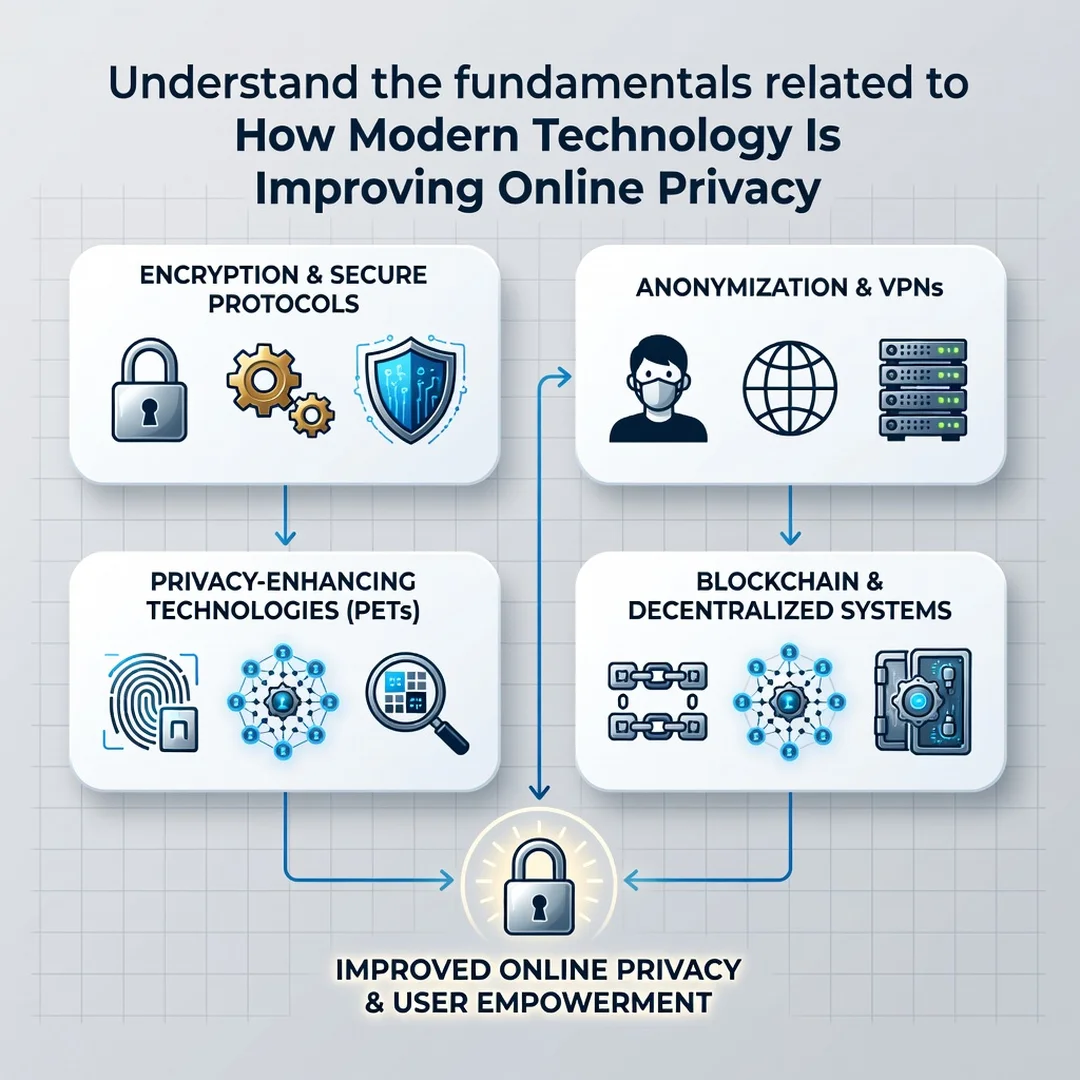
Step 1: Understand the fundamentals
Start by learning what data you generate and who collects it. Every website visit, search query, and app interaction creates a trail. Familiarize yourself with terms like cookies, IP addresses, and fingerprinting. Knowing the basics helps you spot threats and evaluate solutions.
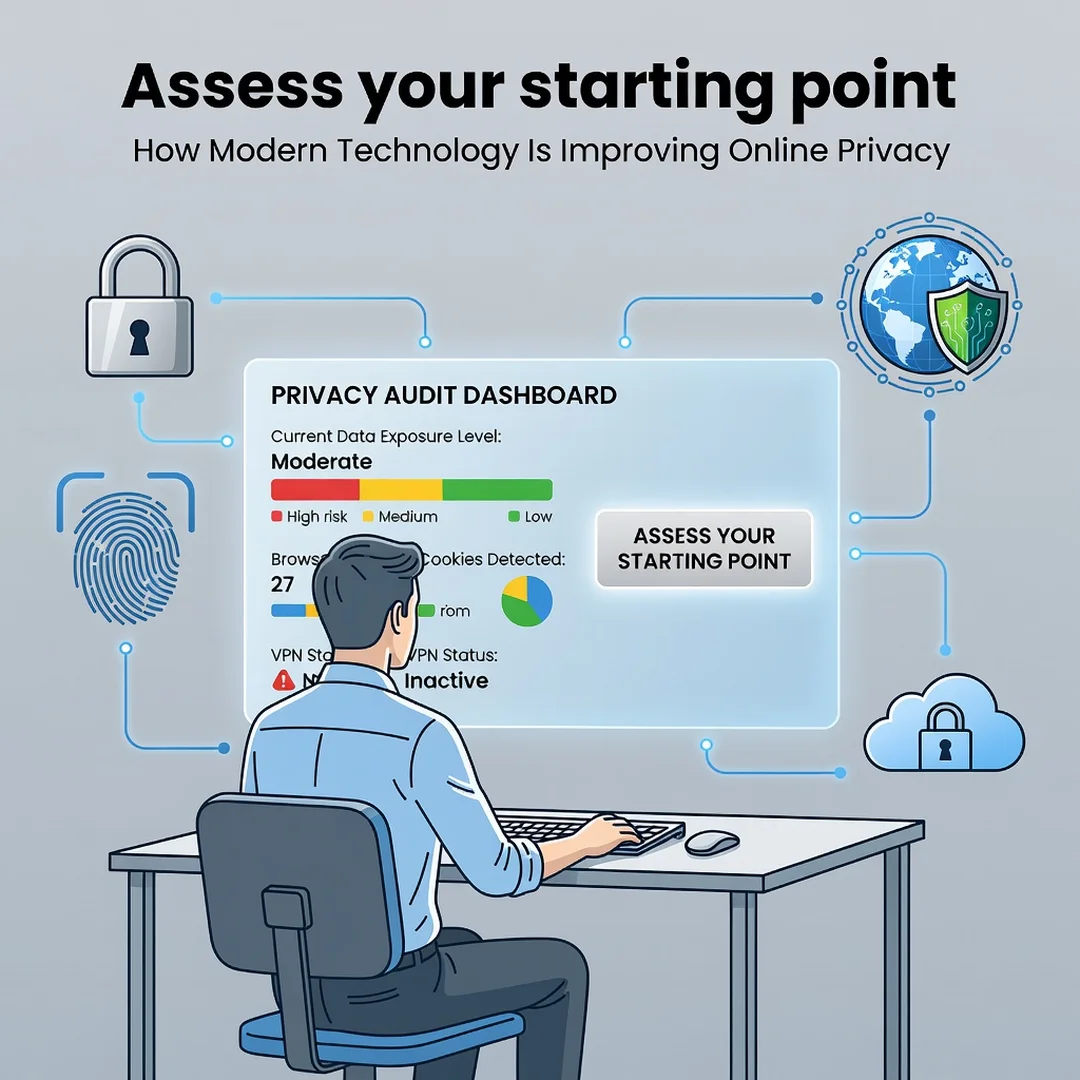
Step 2: Assess your starting point
Take stock of your current digital life. Which browsers and apps do you use most? What permissions have you granted? Have you reused passwords? Tools like Have I Been Pwned can show if your email appears in known data breaches. A quick audit reveals where you are most exposed.
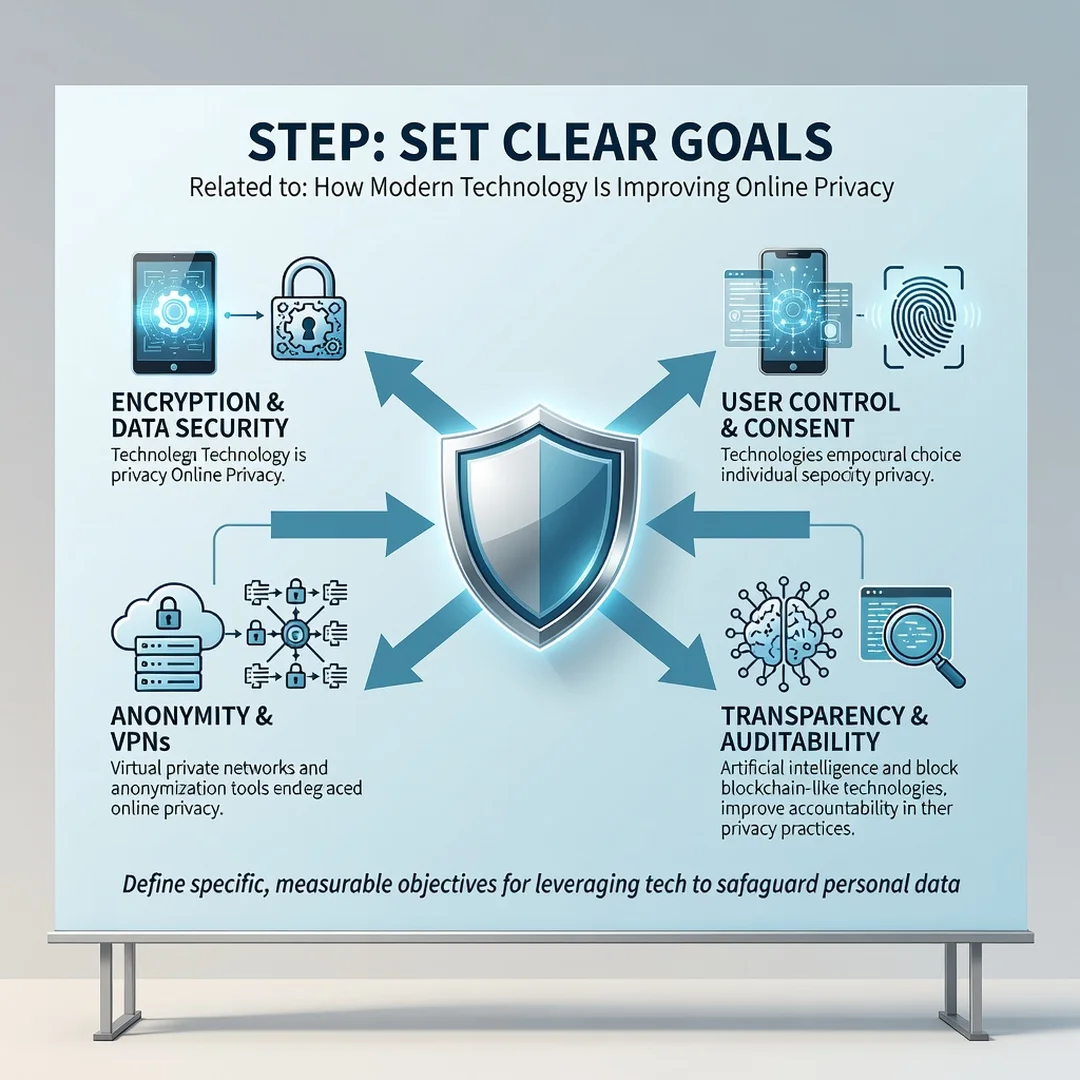
Step 3: Set clear goals
Decide what privacy means for you. Are you trying to stop targeted ads, protect sensitive communications, or hide your browsing from your internet provider? Your goals determine which tools to prioritize. For example, if you mainly want to block ads, a tracker-blocking browser may be enough. If you handle confidential work, you may need E2EE and a VPN.
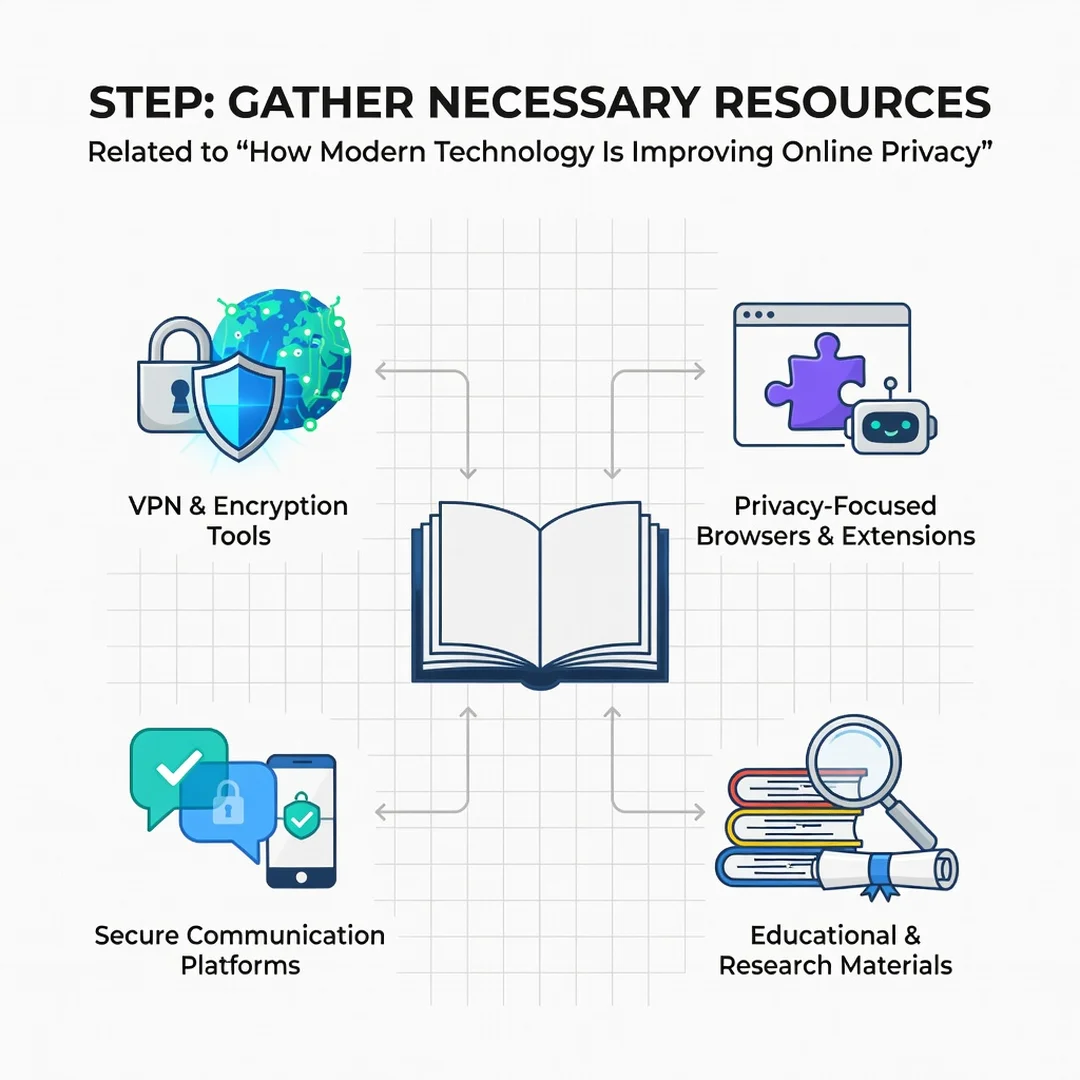
Step 4: Gather necessary resources
Install the tools that match your goals. This might include a privacy browser, a reputable VPN, a password manager, and an E2EE messaging app. Most of these have free tiers. Also, bookmark reliable resources like the Electronic Frontier Foundation or Privacy Guides for ongoing learning.
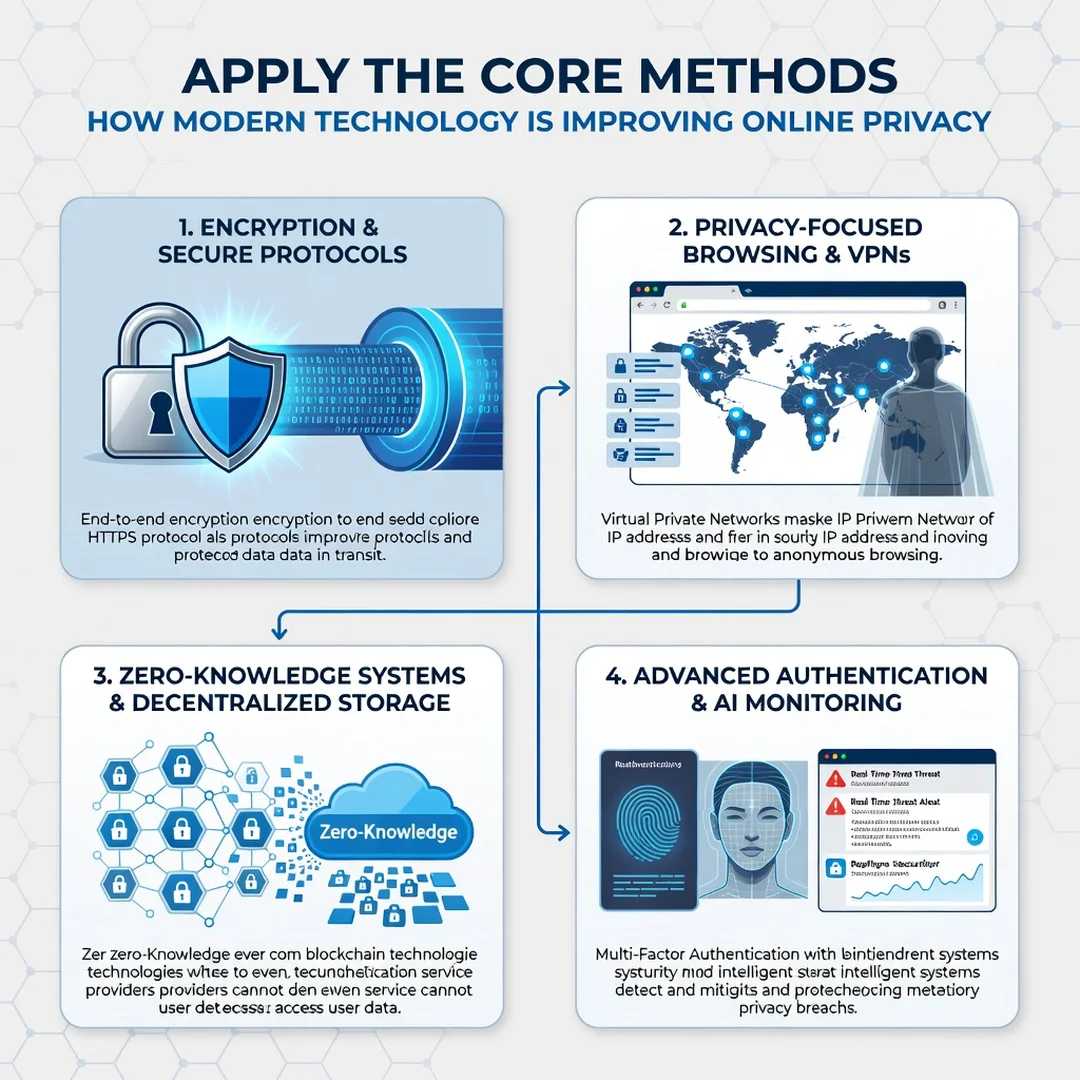
Step 5: Apply the core methods
Now put your plan into action. Switch your default browser, enable two-factor authentication on critical accounts, revoke unnecessary app permissions, and start using your password manager. Change your search engine to a private alternative. Review privacy settings on social media. Consistency matters more than perfection — even small changes add up.
FAQ
What should I know about How Modern Technology Is Improving Online Privacy?
The key takeaway is that technology now offers real, accessible protections: encryption, tracker blocking, and anonymous browsing are no longer reserved for experts. You do not need to be a programmer to benefit. However, no tool is foolproof. You should combine technology with good habits and stay informed about new developments.
Who is this guide for?
This guide is for anyone who uses the internet and wants to reduce their digital footprint without becoming a security professional. It is especially useful for people who are concerned about data collection, targeted advertising, or keeping personal communications private.
Conclusion
Modern technology is making online privacy more achievable than ever. From end-to-end encryption to differential privacy and tracker blocking, the tools exist to help you control your data. By understanding the fundamentals, assessing your situation, setting goals, gathering resources, and applying core methods, you can build a privacy-respecting digital life. Start small, stay consistent, and remember that every step toward better privacy is a step toward greater control over your own information.
Frequently Asked Questions
What should I know about How Modern Technology Is Improving Online Privacy?
This guide covers the essentials of How Modern Technology Is Improving Online Privacy with practical steps you can apply right away.
Who is this guide for?
Anyone looking for a clear, structured overview without unnecessary complexity.
You now have a solid foundation for How Modern Technology Is Improving Online Privacy. Apply the best practices above and revisit this guide as your needs evolve.