
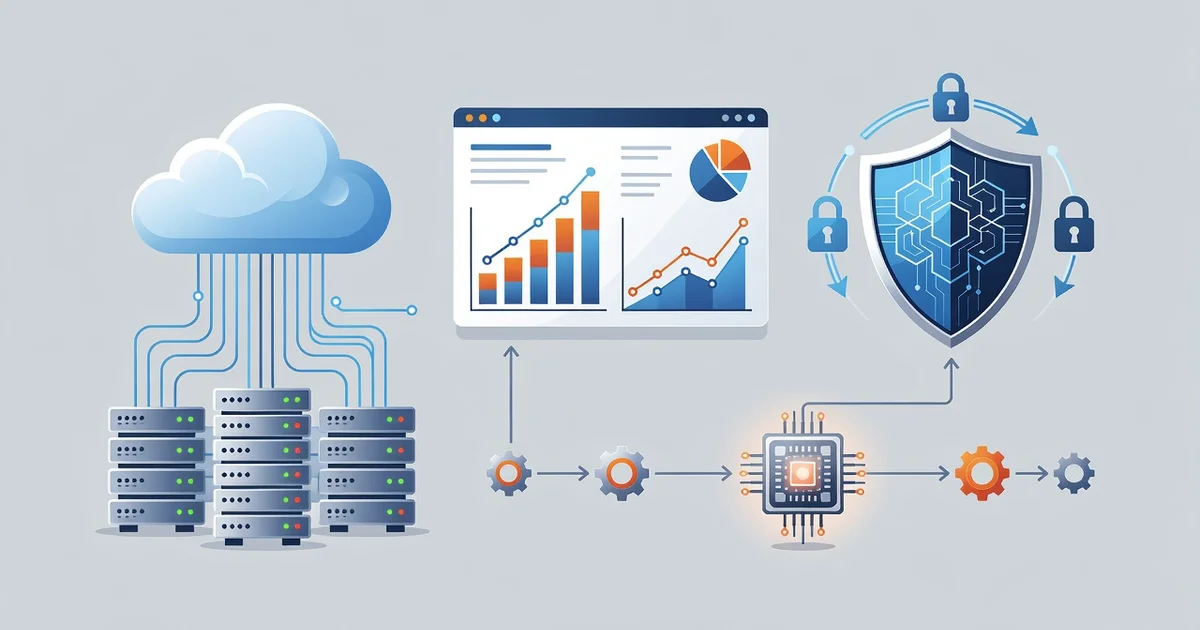
Every business today runs on information—customer records, sales figures, inventory logs, and more. Without the right tools, that data piles up fast, creating confusion instead of clarity. Fortunately, modern technology helps businesses manage data efficiently, turning overwhelming volumes of information into organized, usable assets.
From cloud storage to automated analytics, today’s solutions make it easier to collect, secure, and act on data in real time. In this article, we’ll explore the key technologies driving smarter data management and show you how to apply them for measurable results.
Introduction
Data has become one of the most valuable assets a business owns, and the tools available to manage it have changed dramatically in the past decade. Modern technology helps businesses manage data by automating collection, storage, organization, analysis, and protection, allowing teams to make faster and more accurate decisions. This article explores How Modern Technology Helps Businesses Manage Data with clear, practical guidance. Whether you run a small operation or oversee a large department, understanding the fundamentals of How Modern Technology Helps Businesses Manage Data helps you make informed decisions about tools, budgets, and workflows. The goal here is not to turn you into a data engineer, but to give you a working knowledge of the systems, habits, and safeguards that keep business data useful and secure.
Key Concepts
Before diving into specific tools, it helps to understand a handful of core ideas. These concepts appear repeatedly in any discussion of modern data management.
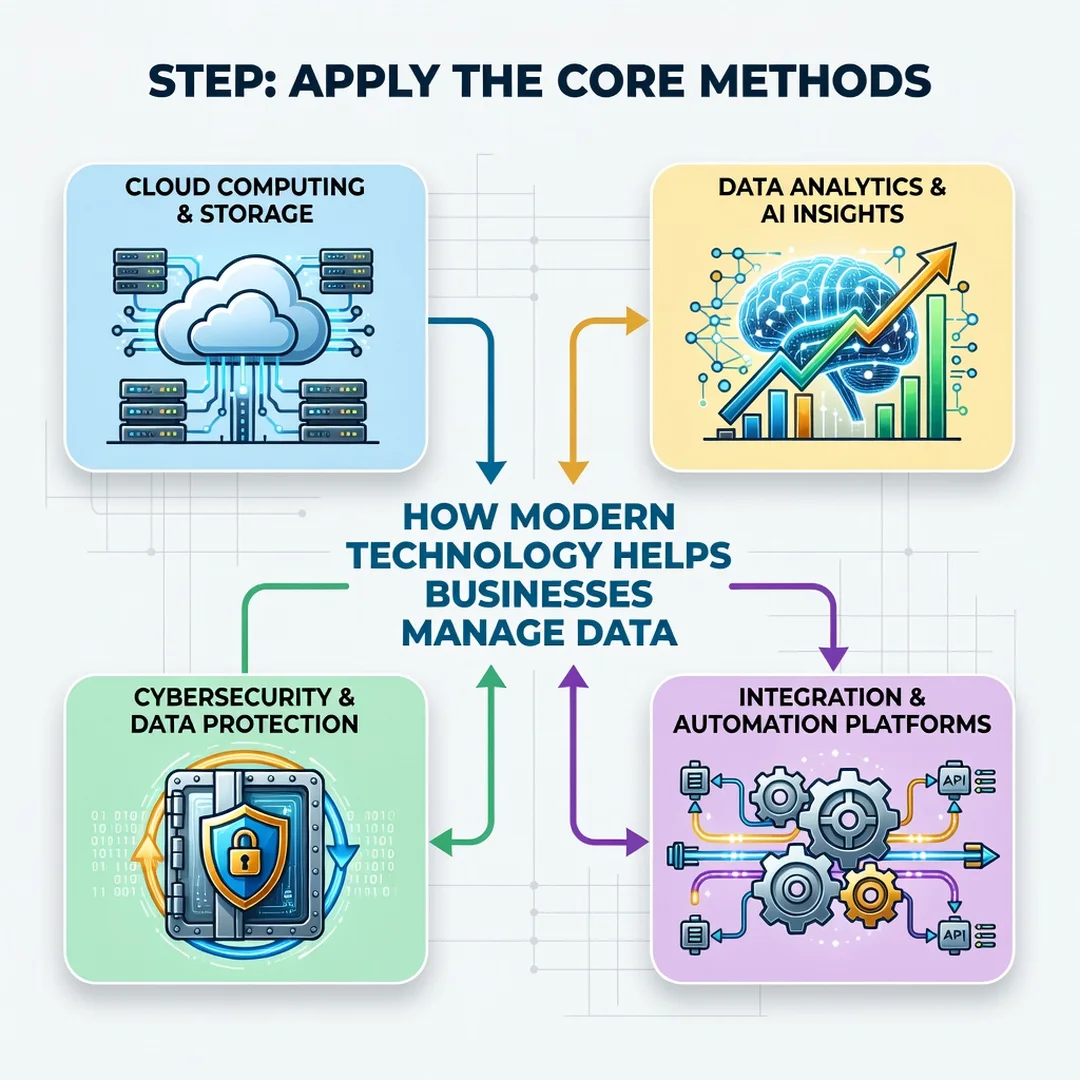
- Cloud storage and computing: Instead of maintaining physical servers, businesses rent secure space and processing power from providers. This lowers upfront costs and makes data accessible from almost anywhere.
- Databases and data warehouses: Databases handle day-to-day transactions, while warehouses consolidate data from multiple sources for reporting and analysis.
- APIs (Application Programming Interfaces): These connectors let different software systems exchange data automatically, reducing manual entry and error.
- Automation and workflows: Scheduled tasks and rule-based triggers move data between systems, generate reports, and flag anomalies without human intervention.
- Data governance: Policies that define who can access what data, how long it is kept, and how it is protected. Governance keeps management practices consistent and compliant.
- Analytics and visualization: Tools that turn raw numbers into charts, dashboards, and summaries that non-technical staff can interpret quickly.
Each of these concepts builds on the others. Cloud storage makes automation easier, automation feeds analytics, and analytics informs governance decisions. Recognizing these connections is the first step toward a coherent data strategy.
Deep Dive
Modern technology has changed data management in several profound ways. The most obvious shift is the move from manual, paper-based processes to digital systems that capture information at the point of creation. A sales representative logging a call, a warehouse scanner reading a barcode, or a website form collecting a customer inquiry all generate structured data instantly.
The second shift is scale. Businesses now produce and consume far more data than they did twenty years ago, and modern tools are designed to handle that volume without slowing down. Cloud platforms can expand storage and processing power on demand, which means a growing company does not have to guess how much hardware it will need in three years.
A third shift is accessibility. Data used to live in silos, locked inside a single department or software program. Today, integration tools and shared dashboards let marketing, finance, and operations work from the same source of truth. That reduces conflicting reports and speeds up decision-making.
Security has also evolved. Encryption, multi-factor authentication, and automated backups are now standard features rather than premium add-ons. These protections matter because data breaches are costly, both financially and in terms of customer trust. Reliable information and consistent habits lead to better long-term outcomes, and security is a core part of that reliability.
Finally, artificial intelligence and machine learning are increasingly embedded in data management platforms. These technologies can detect unusual patterns, predict inventory needs, and even suggest which customers are most likely to churn. They do not replace human judgment, but they surface insights that would take hours to find manually.
Best Practices
Knowing the technology is only half the battle. How you use it determines whether your data management efforts succeed or stall.
- Start with a clear data policy: Document what data you collect, why you collect it, who can see it, and how long you keep it. This prevents confusion and supports compliance.
- Standardize formats and naming: Consistent date formats, file names, and category labels make data easier to search, combine, and analyze.
- Automate repetitive tasks: If a team member spends hours copying data between spreadsheets, look for an integration or script that does it automatically. The time savings compound quickly.
- Back up regularly and test restores: A backup you have never tested is not a reliable backup. Schedule periodic restore drills.
- Train staff continuously: Technology changes, and so do best practices. Short, regular training sessions keep everyone aligned and reduce accidental errors.
- Review and prune: Old, unused data increases storage costs and risk. Set a schedule for reviewing and deleting what you no longer need.
- Measure what matters: Track a few key metrics, such as data accuracy rates or report turnaround times, so you can tell whether your practices are improving.
These habits are not glamorous, but they are what separate organizations that struggle with data from those that use it confidently every day.
Step-by-Step Guide
The following steps offer a practical path for putting modern data management into action, regardless of your starting point.
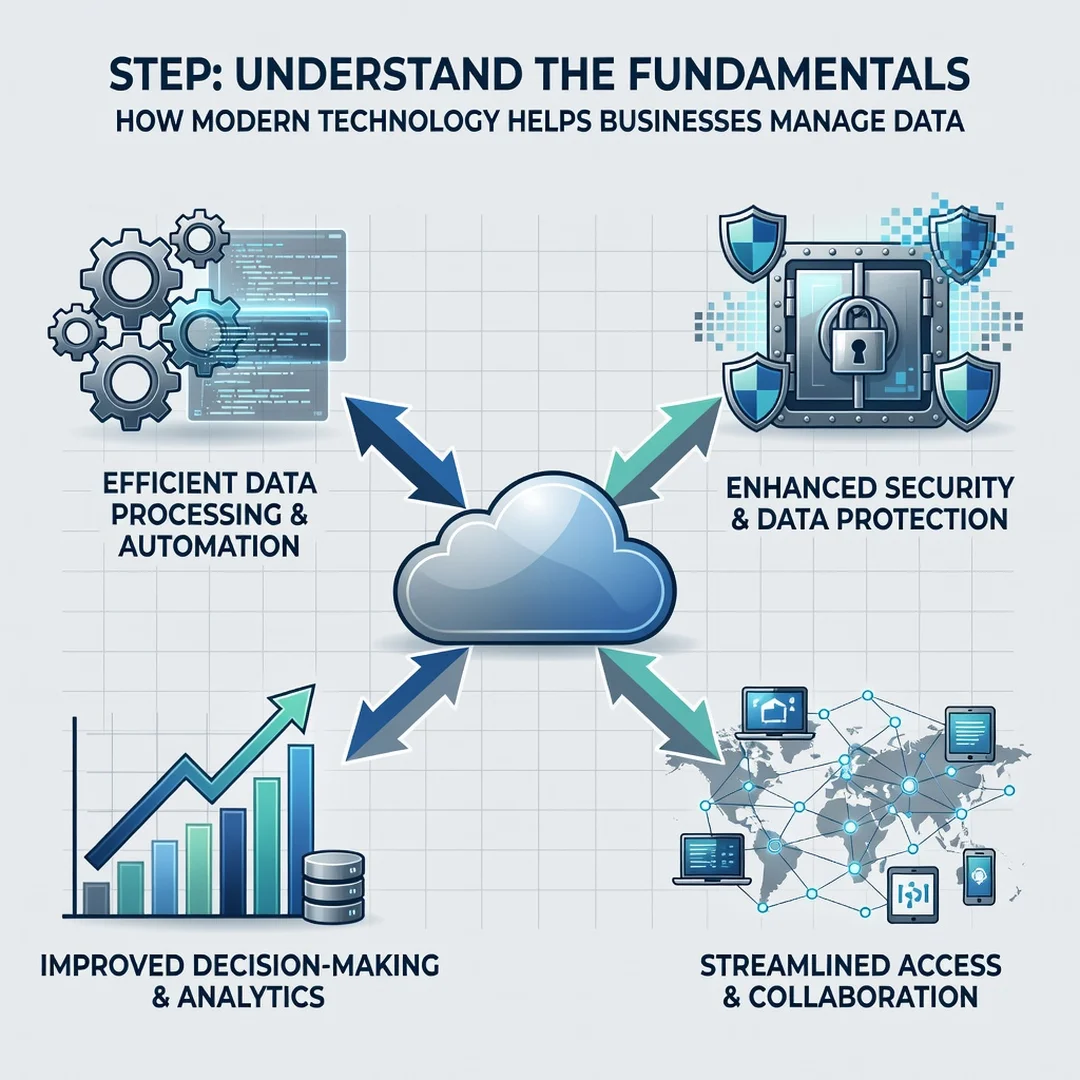
Step 1: Understand the fundamentals
Begin by learning the basic vocabulary and concepts covered earlier in this article. Know the difference between storage and backup, between a database and a spreadsheet, and between analytics and reporting. This foundation helps you ask better questions when evaluating tools or hiring help.
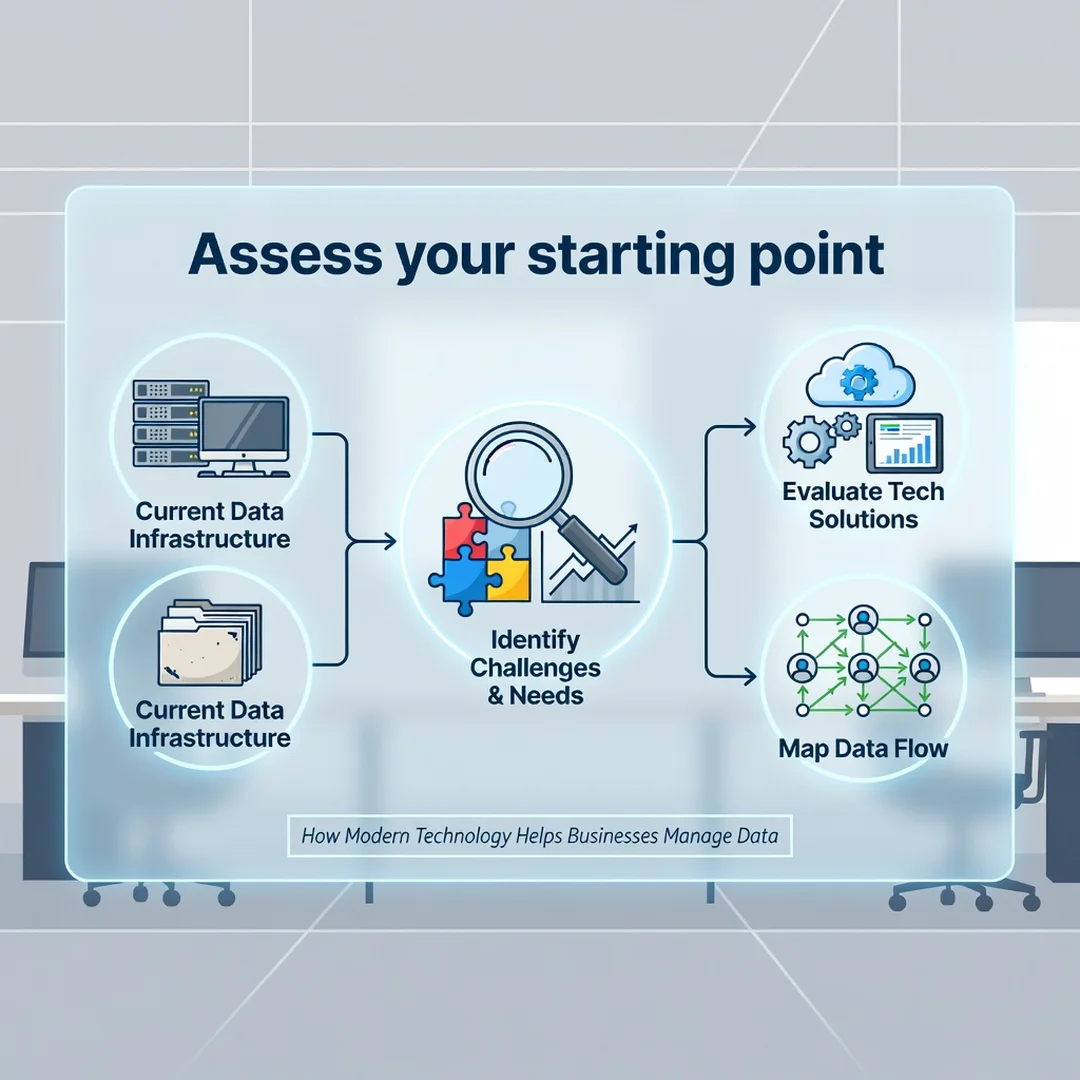
Step 2: Assess your starting point
Take inventory of where your data currently lives. List the software you use, the spreadsheets floating around, and any paper records still in circulation. Identify who touches data and how often. A simple audit often reveals duplicate efforts and gaps you did not know existed.
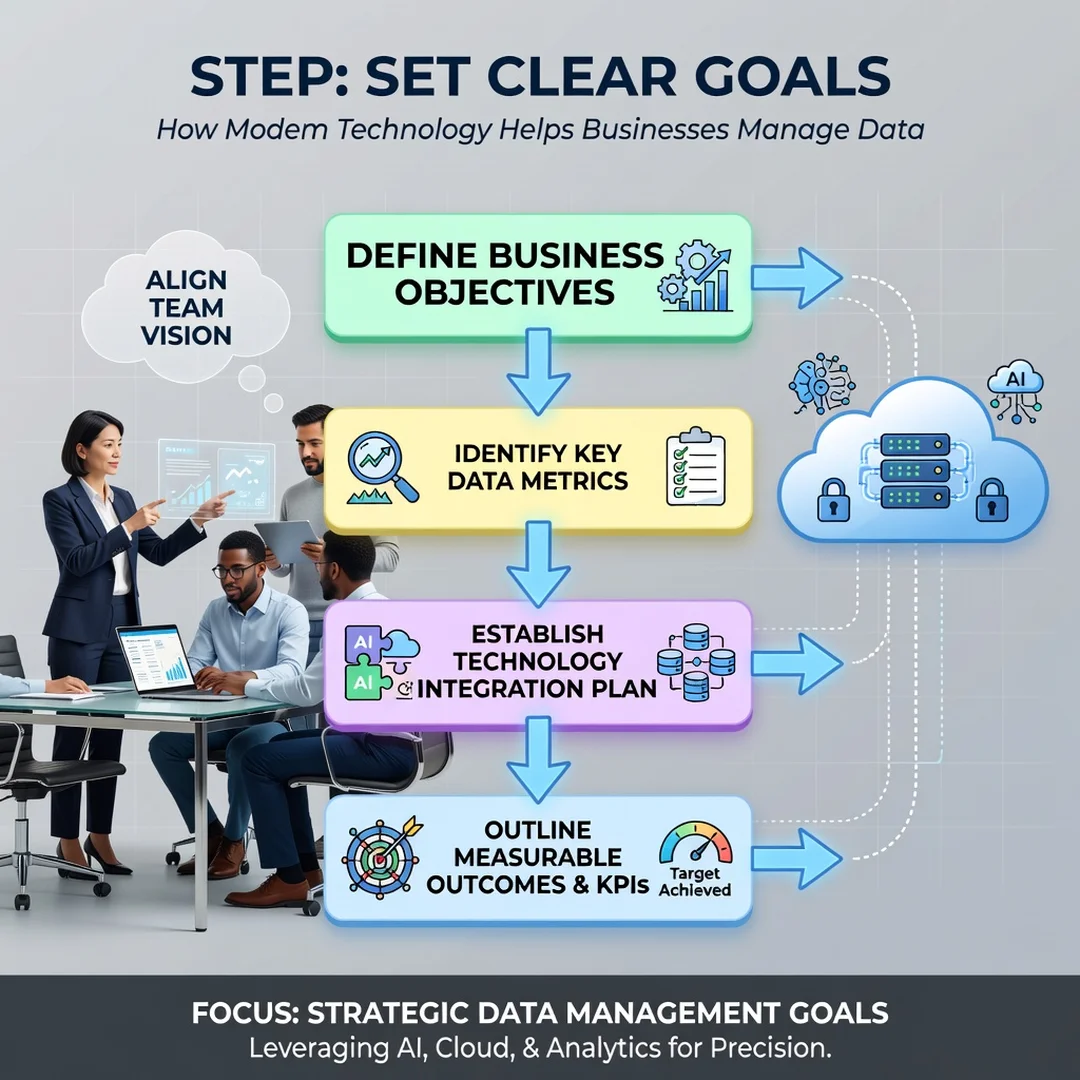
Step 3: Set clear goals
Decide what you want to improve. Maybe you want to cut report preparation time in half, reduce data entry errors, or make customer information available to your support team instantly. Write these goals down and make them specific and measurable. Clear goals guide every subsequent decision about tools and training.
Step 4: Gather necessary resources
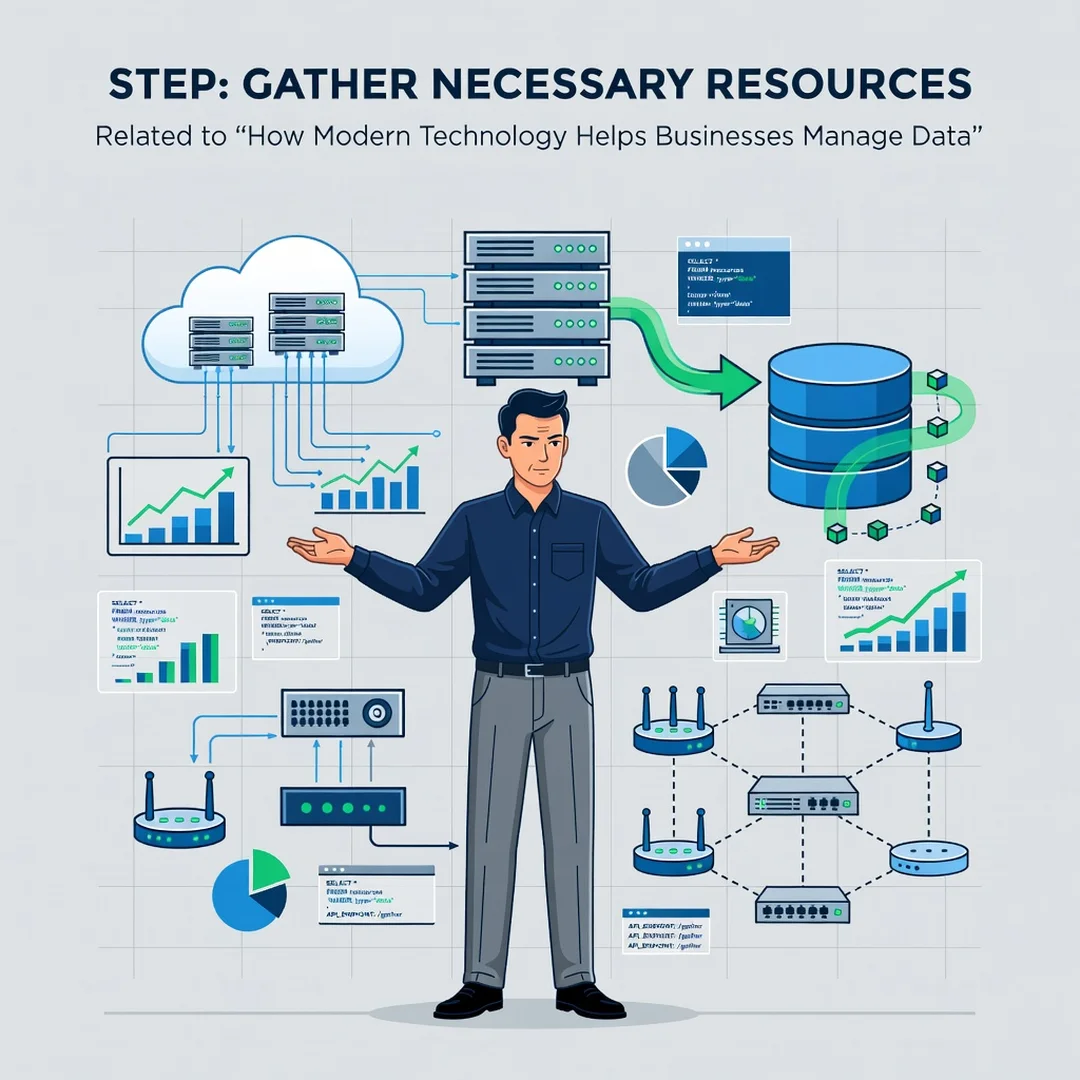
Determine what you need to reach your goals. This might include cloud storage subscriptions, integration software, a budget for staff training, or temporary help from a consultant. Also consider time: someone on your team must own the project and keep it moving.
Step 5: Apply the core methods
Put your plan into practice. Migrate data to your chosen platform, set up automations, establish governance rules, and begin training staff. Start with one department or process rather than trying to change everything at once. Early wins build momentum and make it easier to expand the approach across the organization.
FAQ
What should I know about How Modern Technology Helps Businesses Manage Data?
The most important takeaway is that technology is a tool, not a solution by itself. Cloud platforms, automation, and analytics can dramatically improve how you handle data, but they work best when paired with clear policies, consistent habits, and trained people. Reliable information and consistent habits lead to better long-term outcomes. Focus on understanding your own needs first, then choose technology that addresses them rather than chasing every new trend.
Who is this guide for?
This guide is written for business owners, managers, and team leads who want a practical overview of modern data management without a technical deep dive. It is also useful for employees who have been asked to improve data processes in their department but are not sure where to begin. No prior data science background is required. If you can identify a spreadsheet and a cloud account, you have enough context to start applying the steps outlined here.
Conclusion
Modern technology helps businesses manage data by making collection, storage, analysis, and protection faster and more reliable than ever before. From cloud platforms and automation to analytics dashboards and AI-driven insights, the tools are available and increasingly affordable. The key is to approach them deliberately: understand the fundamentals, assess where you are, set clear goals, gather the right resources, and apply proven methods step by step. Businesses that treat data as a managed asset rather than an afterthought are better positioned to make informed decisions, serve customers well, and adapt as conditions change. Start small, stay consistent, and let reliable information guide your next move.
You now have a solid foundation for How Modern Technology Helps Businesses Manage Data. Apply the best practices above and revisit this guide as your needs evolve.