
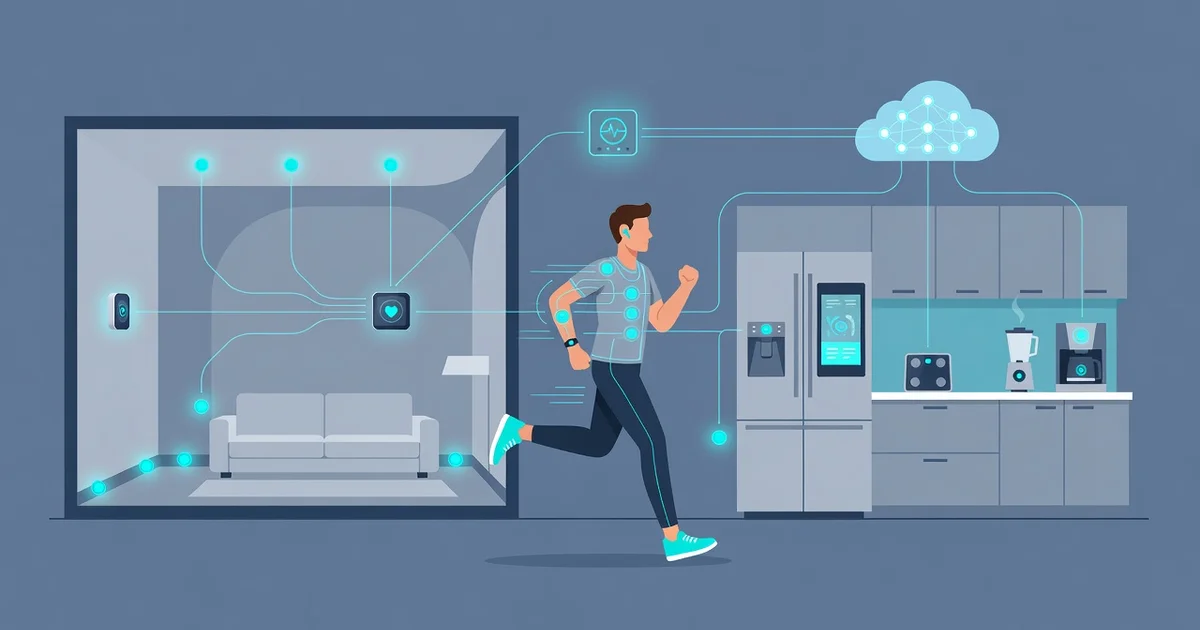
Smart sensors are quietly transforming the devices you already rely on every day. From your phone adjusting screen brightness to your thermostat learning your schedule, these tiny components collect real-time data and trigger intelligent actions without you lifting a finger.
Understanding how smart sensors work—and where they’re headed—helps you make smarter choices about the technology in your home, car, and workplace. In this guide, we break down the key types, practical benefits, and everyday examples you can act on right away.
Introduction
Smart sensors have quietly become one of the most transformative technologies of the modern era. They sit inside your smartphone, your car, your thermostat, and even your fitness tracker, gathering data and making decisions that once required human attention. This article explores How Smart Sensors Are Changing Everyday Technology with clear, practical guidance, so you can understand what these devices do, why they matter, and how to make the most of them in daily life.
Unlike simple sensors that just measure a single condition, smart sensors combine sensing elements with processing power and often connectivity. That means they can filter noise, detect patterns, and trigger actions without constant human oversight. From automatically adjusting your home’s temperature to warning you about a failing car component before it breaks, smart sensors are reshaping how we live and work.
Key Concepts
Before diving deeper, it helps to grasp the basic building blocks. Understanding the fundamentals of How Smart Sensors Are Changing Everyday Technology helps you make informed decisions about which devices to adopt and how to use them safely.
- What makes a sensor “smart”: A smart sensor includes a sensing element (like a temperature probe or accelerometer), a small processor, memory, and usually a communication interface (such as Bluetooth, Wi-Fi, or Zigbee).
- Edge processing: Many smart sensors analyze data locally rather than sending everything to the cloud. This reduces latency, saves bandwidth, and improves privacy.
- Types of smart sensors: Common categories include motion, environmental (temperature, humidity, air quality), biometric, proximity, and image sensors.
- Internet of Things (IoT): Smart sensors are the eyes and ears of IoT systems, feeding real-time data into apps and automated controls.
- Data and privacy: Because these sensors collect continuous streams of information, understanding what data leaves your device and where it goes is essential.
Deep Dive
To see how smart sensors change everyday technology, consider a few familiar examples.
Home and energy management
Smart thermostats use occupancy and temperature sensors to learn your schedule. They can lower heating when you’re away and warm the house before you return. The result is lower energy bills and less waste. Similarly, smart lighting systems use motion and ambient-light sensors to dim or brighten rooms automatically.
Health and fitness wearables
Fitness trackers and smartwatches pack optical heart-rate sensors, accelerometers, and sometimes blood-oxygen sensors. They turn continuous body signals into actionable insights, such as resting heart rate trends or sleep quality scores. Over time, this data can help you spot patterns and make healthier choices.
Transportation and safety
Modern cars rely on dozens of smart sensors: parking assist, lane-keeping, automatic emergency braking, and tire-pressure monitoring. These systems process data in milliseconds and can intervene before a driver even reacts. In public transit and logistics, smart sensors track vehicle health and cargo conditions, reducing delays and spoilage.
Industrial and environmental monitoring
Factories use vibration and temperature sensors to predict machine failures before they happen, a practice called predictive maintenance. In agriculture, soil moisture sensors guide irrigation, saving water while improving crop yields. In cities, air-quality sensors help map pollution hotspots in real time.
Reliable information and consistent habits lead to better long-term outcomes. That principle applies whether you are managing a home, a fleet of vehicles, or your own health. Smart sensors provide the reliable data; your consistent habits turn that data into real improvements.
Best Practices
Getting the most from smart sensors is not just about buying the latest gadget. It is about using them thoughtfully and maintaining them properly.
- Start with a clear purpose: Decide what problem you want to solve—saving energy, tracking fitness, improving security—before choosing a device.
- Check compatibility: Ensure the sensor works with your existing hub, app, or ecosystem (such as Apple Home, Google Home, or Amazon Alexa).
- Update firmware regularly: Manufacturers release updates that fix bugs and improve accuracy. Enable automatic updates when possible.
- Calibrate when needed: Some sensors drift over time. Follow the manufacturer’s calibration schedule for best accuracy.
- Review privacy settings: Limit data sharing to what is necessary. Use local processing when available.
- Monitor battery life: A dead sensor is a useless sensor. Set reminders to replace batteries or recharge devices.
Step-by-Step Guide to Adopting Smart Sensors
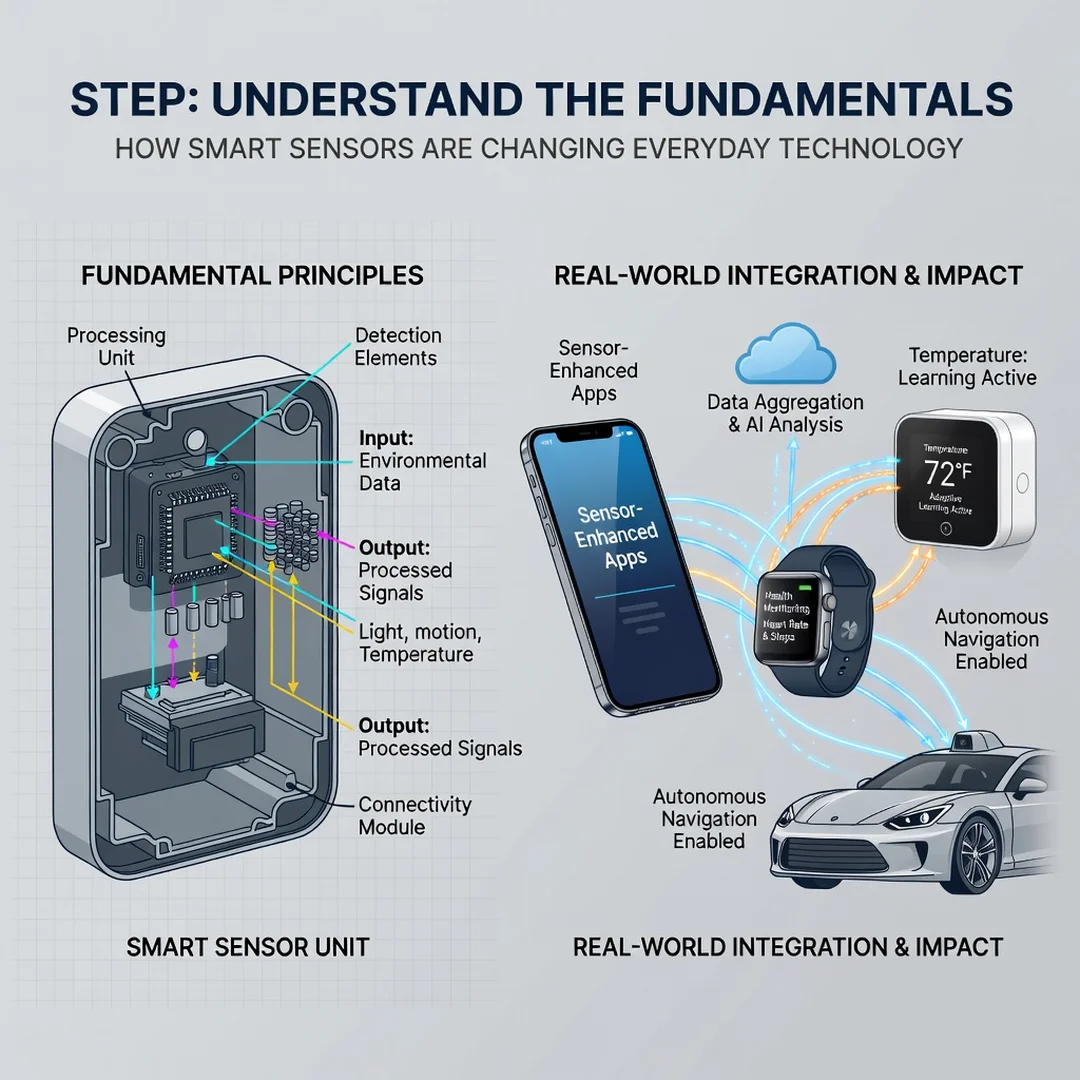
Step 1: Understand the fundamentals
Learn the basics of how smart sensors work, including sensing, processing, and communication. Read product specifications and understand terms like accuracy, resolution, and sampling rate. This knowledge prevents costly mistakes and helps you compare options fairly.
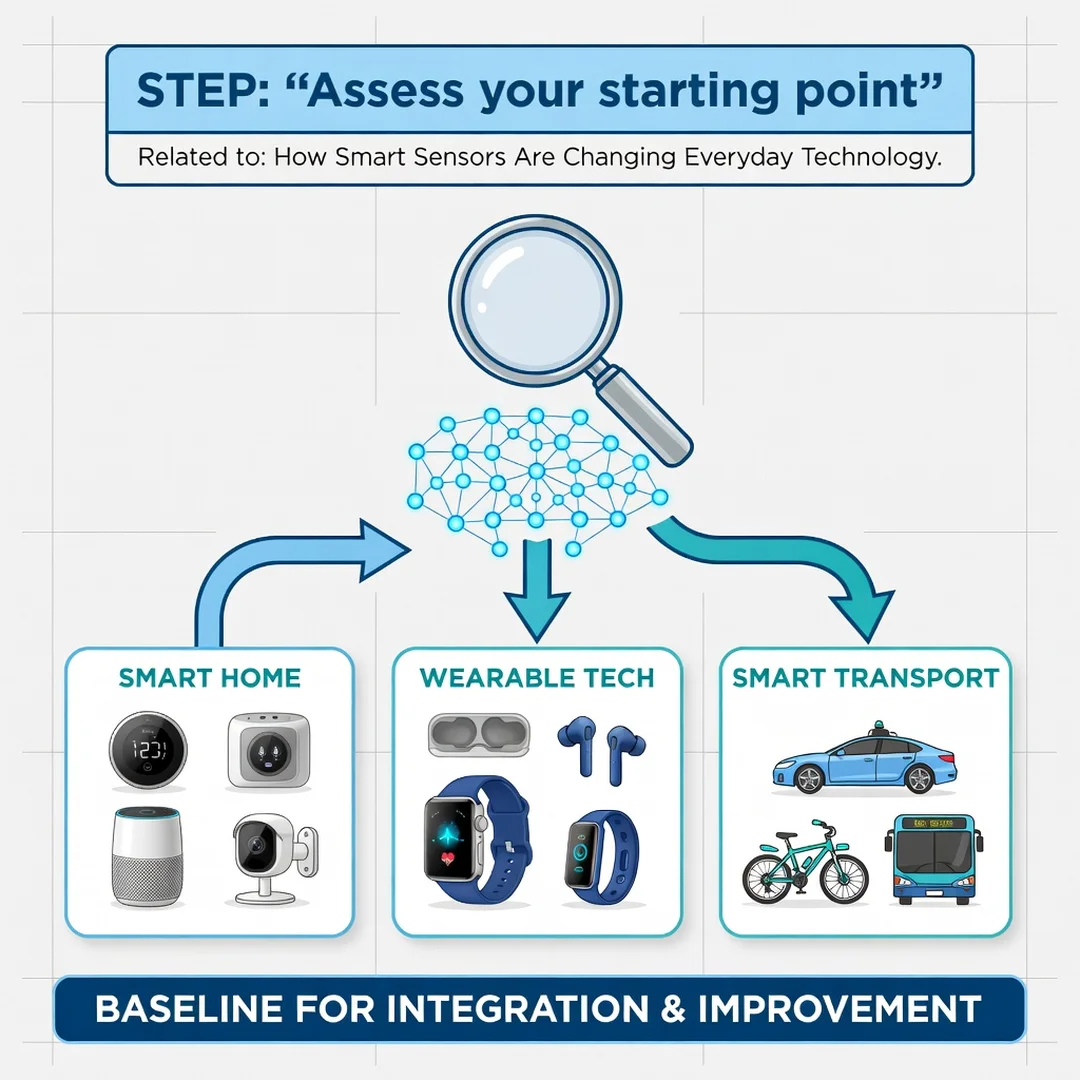
Step 2: Assess your starting point
Take stock of your current environment. What devices do you already own? What problems are you trying to solve? For example, if your energy bill is high, focus on smart thermostats and plugs. If you want better sleep insights, look at wearable sensors. A clear baseline makes it easier to measure improvement later.
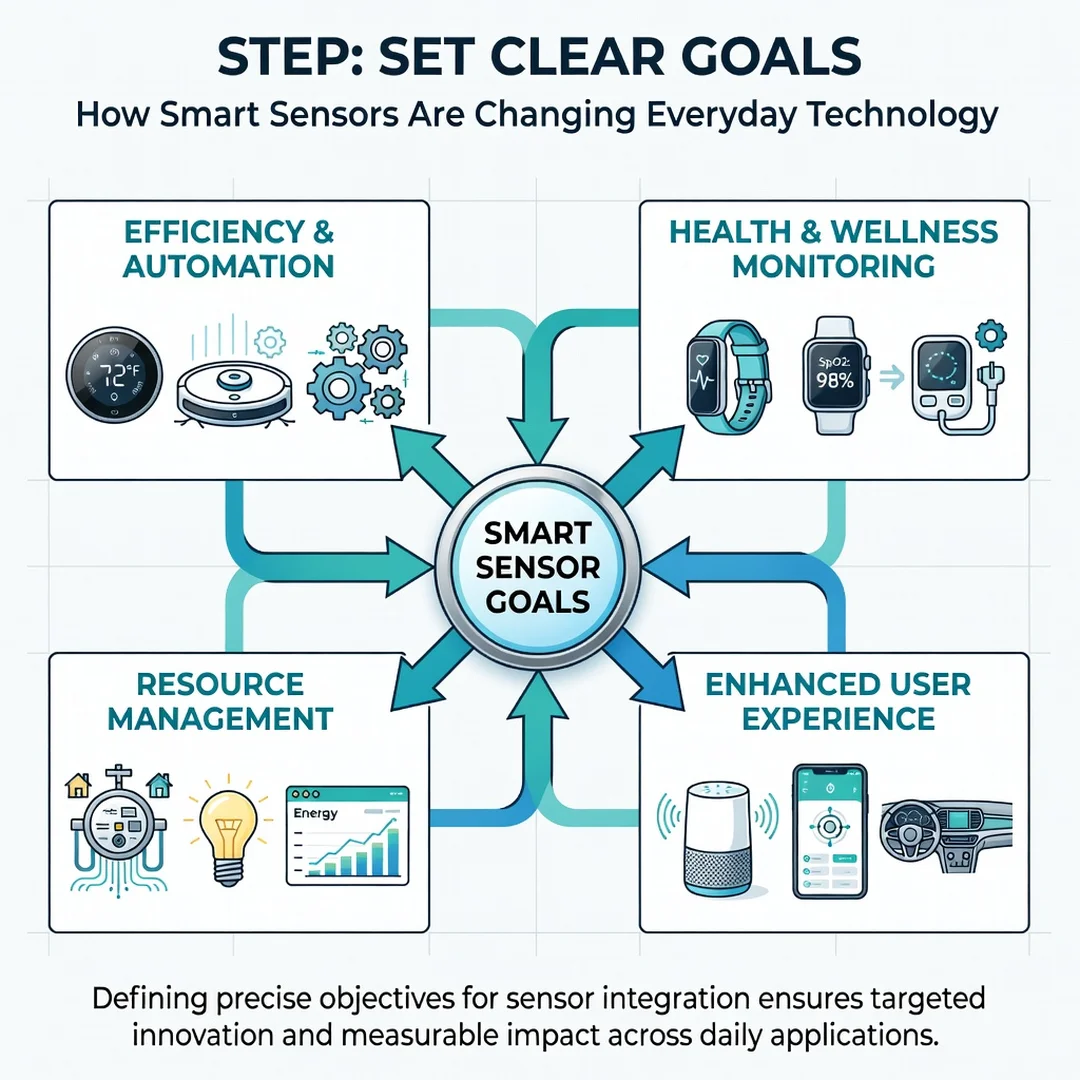
Step 3: Set clear goals
Define what success looks like. A goal might be “reduce home energy use by 15% in three months” or “track daily steps consistently for 30 days.” Specific, measurable goals help you choose the right sensors and stay motivated.
Step 4: Gather necessary resources
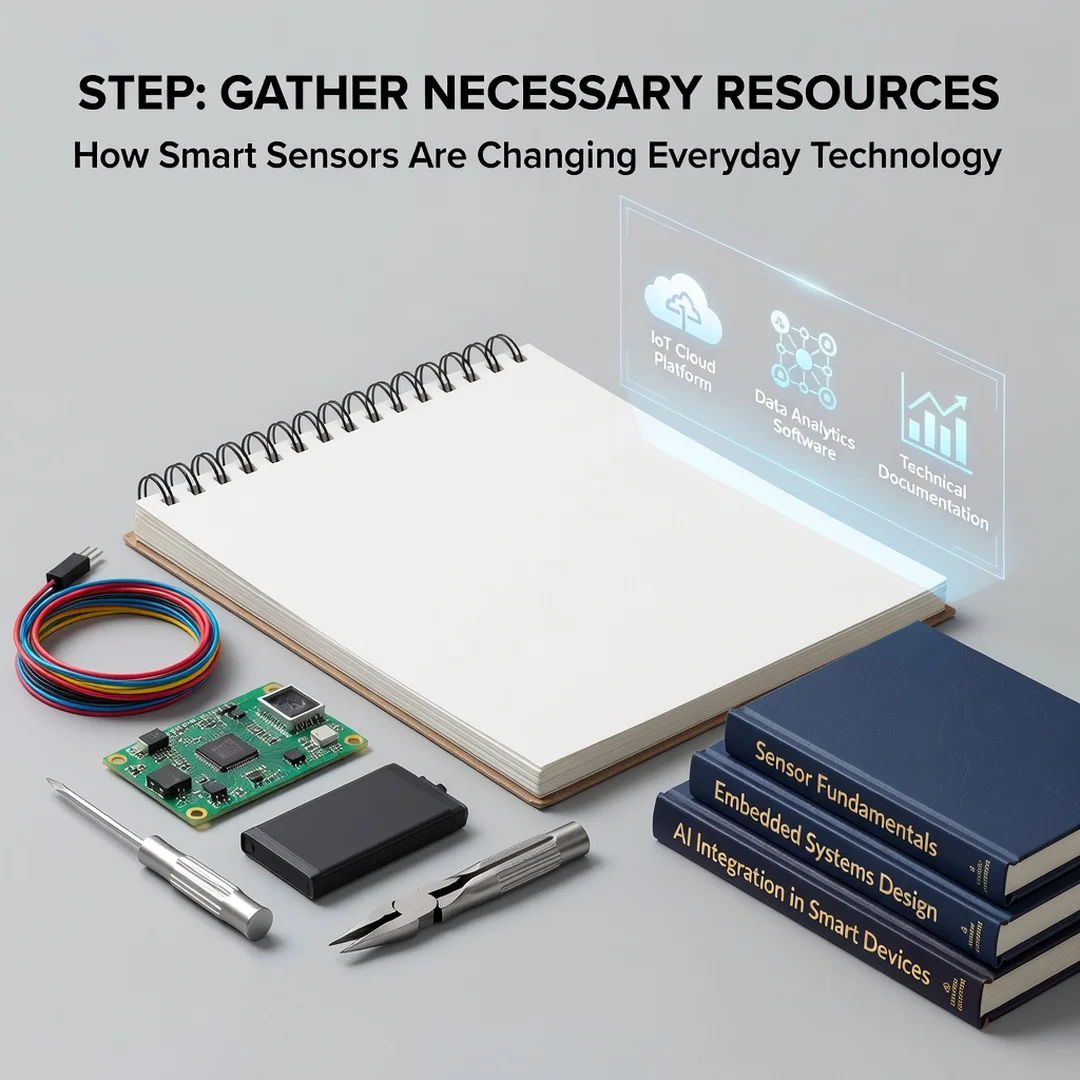
You will need the sensors themselves, a smartphone or hub to receive data, and possibly a subscription for advanced analytics. Also budget time for installation and learning. Some devices require a compatible smart home hub; others work directly with your phone. Check return policies in case a device does not fit your needs.
Step 5: Apply the core methods
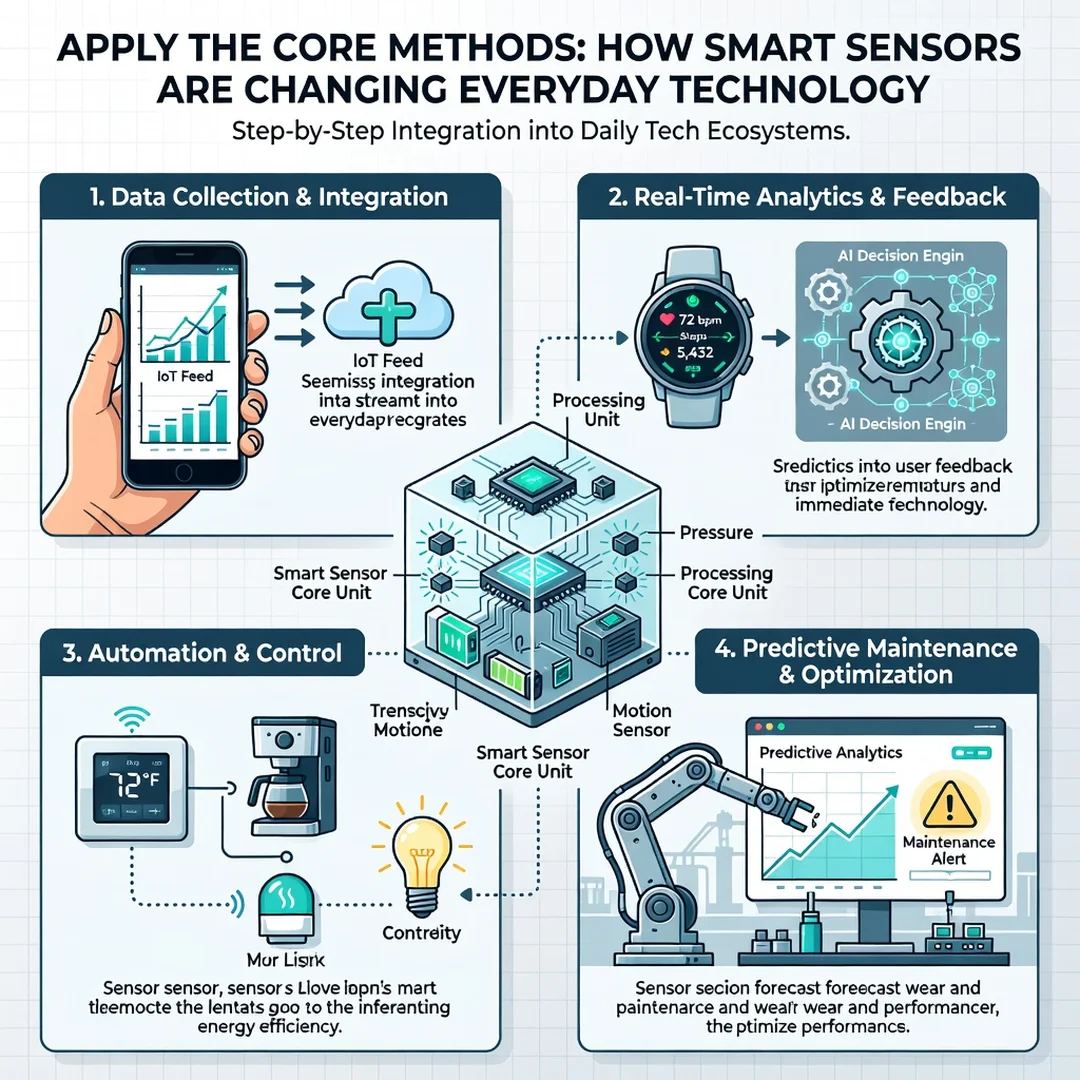
Install and configure your sensors according to the manual. Place them where they can get accurate readings—away from direct sunlight for temperature sensors, at chest level for motion sensors. Set up alerts or automations that match your goals. Then review the data weekly. Adjust placement, settings, or habits as needed. Consistency is key: the more regularly you engage with the data, the more value you get.
FAQ
What should I know about How Smart Sensors Are Changing Everyday Technology?
The most important thing to know is that smart sensors are already part of your daily life, even if you do not notice them. They improve convenience, safety, and efficiency by turning physical measurements into digital actions. Understanding their basic operation, limitations, and privacy implications helps you use them wisely. Remember that no sensor is perfectly accurate, and data should inform—not replace—your own judgment.
Who is this guide for?
This guide is for anyone curious about smart sensors and how they affect everyday technology. Whether you are a homeowner looking to save energy, a fitness enthusiast tracking health metrics, or simply someone who wants to make informed decisions about new devices, the principles here apply. No technical background is required—just a willingness to learn and experiment.
Conclusion
Smart sensors are not a passing trend; they are a foundational technology that will continue to shape homes, workplaces, and personal health. By understanding the fundamentals, setting clear goals, and following best practices, you can harness their potential without getting overwhelmed. Start small, stay consistent, and let reliable data guide your decisions. The everyday technology around you is already smarter than you think—now you can be too.
Frequently Asked Questions
What should I know about How Smart Sensors Are Changing Everyday Technology?
This guide covers the essentials of How Smart Sensors Are Changing Everyday Technology with practical steps you can apply right away.
Who is this guide for?
Anyone looking for a clear, structured overview without unnecessary complexity.
You now have a solid foundation for How Smart Sensors Are Changing Everyday Technology. Apply the best practices above and revisit this guide as your needs evolve.